Telemonitoring Revives Diabetes Care for Lost Patients: UAE Study Finds Success
By ProactiveWellness Care Editorial Team
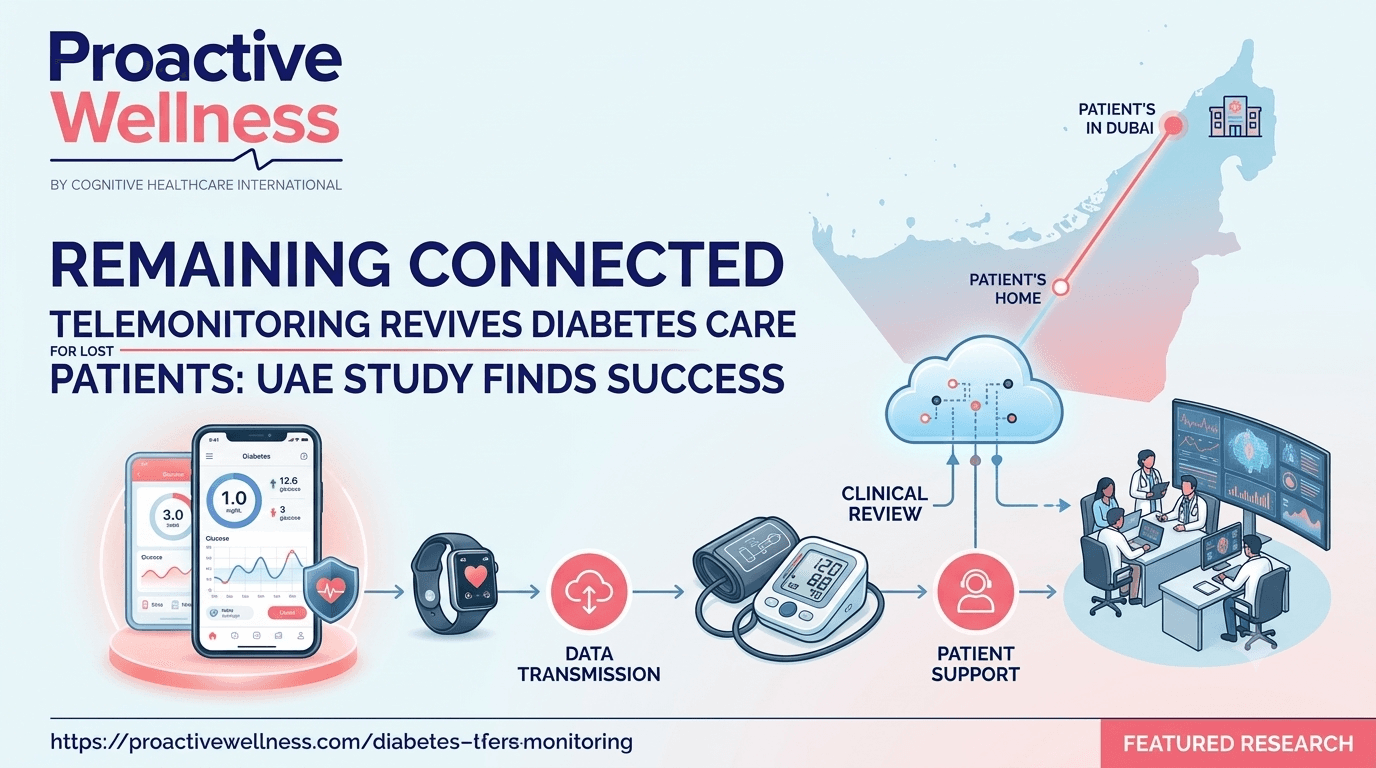
Telemonitoring (TM), mobile-phone technology for health, and Bluetooth-enabled self-monitoring devices represent innovative solutions for proper glycemic control, compliance and monitoring, and access to providers. A study conducted at the Dubai Diabetes Center (DDC) in the United Arab Emirates evaluated the impact of TM devices on glycemic control and compliance of 38 previously lost-to-follow-up (LTFU) patients with type 2 diabetes mellitus (T2DM).
Study Background
In the Middle East and North Africa (MENA) region, diabetes affects 55 million people, with a notably higher prevalence (12.8%) than the global average (nearly 9.3%) in 2019. After Saudi Arabia and Kuwait, the United Arab Emirates (UAE) has one of the highest diabetes burdens in the Middle East (16.3%).
Although several well-established behavioral and therapeutic interventions exist for diabetes, patient outcomes are still poor, with a high incidence of diabetes-related complications. Diabetes-related complications can be prevented or delayed with intensive glucose control. Nevertheless, up to 60%–78.2% of adult patients with diabetes in the MENA region are inadequately controlled. In UAE, a five-year retrospective study noted that only 37.7% of the population with diabetes in Dubai had HbA1c <7%.
Generally, inadequate home blood glucose (BG) monitoring, nonadherence with medications or recommended lifestyle behaviors (nutrition and exercise), suboptimal patient education about the disease, and limited access to health experts are all factors that may lead to suboptimal BG control. Loss-to-follow-up (LTFU) is one of the primary drivers of poor diabetes outcomes in well-resourced countries.
Patients are more likely to achieve adequate glucose control if they attend their scheduled visits; nonetheless, data from the MENA region highlight that a considerable proportion of patients with diabetes do not follow the recommended appointment schedules with their physicians.
Therefore, several researchers proposed the application of telemedicine, including telemonitoring (TM) and teleconsultation, to optimize and improve the management of patients with T2DM. The cumulative body of evidence highlights that the application of telemedicine results in committed patients, which may improve glycemic control and reduce the need for hospital admissions.
Telemedicine and mobile-phone technology for health (mHealth), along with Bluetooth-enabled self-monitoring devices, can be effective solutions for educational challenges, compliance and monitoring, and access to providers. BG control could be enhanced safely by adjusting drugs based on home BG readings reported to clinicians remotely.
The necessity for the application of telemedicine has been widely recognized following the emergence of the coronavirus disease 2019 (COVID-19) pandemic. People with diabetes are classified as a high-risk group for severe COVID-19 illness and are advised to maintain social distancing measures. These measures have negatively impacted the access of patients to healthcare providers.
For a chronic disease such as diabetes that requires careful BG monitoring along with recurrent physician consultation, telemedicine can be a viable alternative for patients seeking medical guidance without physical attendance to the clinics and increasing their risk of COVID-19 infection. Telemedicine represents a valuable tool for remote patient consultation and early recognition of possible diabetes complications, signs of blood glucose dysregulation, and infection.
Study Methods
This was an interventional single-center study that randomly recruited LTFU patients from the Dubai Diabetes Center (DDC), UAE. After contact and recruitment by phone, patients had an initial visit at which they were provided with home-based TM devices. A follow-up visit was conducted three months later.
The study recruited adult patients (aged ≥18 years) with an established diagnosis of T2DM and HbA1c >8% at the time of the study's initiation. Only patients who had missed their appointments for more than one year before the study's initiation were included. Patients who were familiar with the use of technology (self or dedicated family member) and provided written informed consent were included.
All patients were provided with TM devices for home use. These included a OneTouch Select Plus Flex blood glucose monitor (LifeScan Inc, Malvern, PA USA), electronic sphygmomanometer (Cognitive Healthcare International [CHI], European approval, CE mark), heart rate monitor and pulse oximeter (CHI, European approval, CE mark), and portable pill dispenser (CHI, European approval, CE mark). All patients were also provided with a dedicated phone with data connectivity only, which had the CHI app preloaded.
Key Findings
The mean HbA1c decreased significantly from 10.3 ± 1.9% at baseline to 7.4 ± 1.5% at the end of follow-up, with a mean difference (MD) of −2.9% [95% CI: −3.6 to −2.2]. The percentage of patients with HbA1c <7% was 50% after three months.
Home-based blood sugar monitor devices showed a significant reduction in fasting blood glucose (FBG) after three months (MD = -40.1 mg/dL, 95% CI: −70.8 to −9.3). A significant reduction was observed in terms of body weight after three months (MD = −1.3 kg, 95% CI: −2.5 to −0.08).
The mean number of days the participants used a device was the highest for portable pill dispensers (86.5 ± 22.8 days), followed by a OneTouch® blood glucose monitor (72.9 ± 23.5 days). The electronic sphygmomanometer was used for a mean of 62.3 ± 28.6 days, while the pulse oximeter was used for 50.4 ± 28.6 days.
The home-based measurements revealed no significant changes in systolic blood pressure, pulse rate, and oxygen saturation across the three months of follow-up. However, the diastolic blood pressure significantly decreased at the end of follow-up (−3.5 mmHg, 95% CI: −6.6 to −0.4).
Laboratory testing showed a significant reduction in total cholesterol (MD: −20.6 mg/dL, 95% CI: −33.9 to −7.3) and low-density lipoprotein cholesterol (LDL-C; MD: −18.4 mg/dL, 95% CI: −29.5 to −7.3) after three months, compared to baseline measures.
Study Conclusions
TM led to significant improvements in overall diabetes outcomes, including glycemic control and body weight, indicating its effectiveness in a challenging population of T2DM patients who had previously been lost to follow-up.
The study demonstrated that implementing the TM program, which involved home-based and center-based devices, led to significant improvements in overall diabetes measures, including glycemic control, body weight, and lipid profile. TM intervention represents an effective solution to engage a challenging population of patients with T2DM who had previously been lost to follow-up, resulting in improvements in metabolic parameters, such as HbA1c, FBG, diastolic blood pressure, weight, total cholesterol, and LDL-cholesterol.
The current international guidelines recommend routine consultations every three months for patients with T2DM, particularly for poorly controlled patients. Nonetheless, many patients were reported to skip regular face-to-face consultations. The traditional consultation method is relatively time-consuming for health care professionals and patients and ineffectively supports patient self-management.
TM, where the patient measures their signs and symptoms at home and makes them electronically available to their healthcare provider, is an intervention requiring input from patients and providers. Many countries have used various TM strategies to manage T2DM, depending on their clinical circumstances.
To the best of the researchers' knowledge, this is the first study in the UAE that assessed the impact of TM on the management of patients with diabetes. TM interventions, given via cellular phones and the Internet, have demonstrated their usefulness in multiple clinical trials in enhancing diabetes outcomes and lowering diabetes care costs.
The study found that the application of the TM approach resulted in adequate patient compliance, as reflected by the high utilization of BG monitoring devices and portable pill dispensers over the study's period. These findings run in parallel with the current body of evidence highlighting the beneficial role of telemedicine in the patients' adherence to diabetes self-care practices.
Source: Original article